

Corporate PPAs in Africa: How They Work and What to Check

A corporate power purchase agreement (PPA) is a long-term contract in which a business buys electricity from a renewable generator at an agreed price, instead of relying only on the grid. In Africa it is a way to fix energy costs, ride out unreliable supply and cut emissions that your ESG reporting has to account for. It only works if you understand the structure, the risks and the local rules before you sign. At Exereco we cover African energy and finance news and support organisations with ESG reporting, so this guide sets out the decisions in the order you will meet them.
Key Takeaways
A corporate PPA is a contract between a power producer and a buyer that sets how electricity is sold and paid for. In Africa it is delivered onsite, through a wheeling arrangement across the grid, or settled financially.
Embedded corporate PPAs are commonly shorter than utility deals, typically 10 to 20 years, so the term can match your site or business horizon.
The risks that decide whether a deal is bankable are buyer credit, currency, grid access and curtailment. Each can be priced or secured in the contract.
Rules differ by country and are moving. South Africa has widened private supply, and Kenya has lifted its PPA moratorium subject to conditions.
What a corporate PPA is
The World Bank’s handbook on PPAs defines a PPA as the contract between a power producer and a buyer that governs the sale and purchase of power. In a utility deal the buyer is a state-owned utility. In a corporate PPA the buyer is a company, such as a mine, a manufacturer, a retailer or a data centre, that contracts directly or indirectly with the generator.
The generator normally builds, owns and operates the plant. You pay for the electricity delivered, usually per kilowatt-hour or megawatt-hour, not for the equipment. That is why a PPA appeals to firms that want clean power without carrying the capital cost of a solar farm on their own balance sheet.
The contract matters beyond the energy bill. Corporate PPA analysis covering Sub-Saharan Africa points to long-term price certainty and potential savings, a response to unreliable grid supply, progress on sustainability targets, and longer-term offtake that supports renewable development. For a sustainability team, the last two are what turn an energy contract into an ESG item.
Three ways power reaches you
The label on the contract describes how the electricity travels and how money moves. The same reports use broadly consistent categories.
Structure | How it works | Typical fit |
|---|---|---|
Behind-the-meter (onsite) | The plant sits on or next to your site and its output is consumed directly | Factories, warehouses, mines with space and steady daytime load |
Private wire | A nearby plant supplies you without using a third-party utility or grid connection | Industrial parks, neighbouring sites |
Sleeved or wheeled | Power travels over the grid, with an intermediary or a wheeling arrangement transporting it and sometimes topping up supply | Buyers without space for generation, or with several sites |
Virtual | A financial settlement of the price difference, while you keep taking grid supply | Buyers who want the price hedge and the certificates, not physical delivery |
The Baker McKenzie report on corporate procurement in Sub-Saharan Africa distinguishes behind-the-meter, sleeved and virtual models. It also notes that where licensing restrictions apply, parties have used leases or hire-purchase arrangements linked to the energy produced. Bird & Bird’s 2024 corporate PPA report describes private-wire supply to a nearby offtaker and sleeved supply through an intermediary.
Two payment bases matter inside a sleeved deal. Under pay-as-produced you pay for what is delivered. Under pay-as-nominated you pay for a fixed amount whatever the plant produces, so any overproduction is not a saving. Which is better depends on how closely your load follows the plant’s output.
A practical point for planners: not every route is open everywhere. The Climate Group, UNOPS and APRA report of November 2026 lists PPAs, onsite generation and renewable energy certificates as the main routes to corporate renewable procurement in Sub-Saharan Africa, and says conventional utility-scale PPAs remain inaccessible in many markets. Onsite and certificate routes are often the realistic first step.
Why the market is growing
South Africa shows the pattern most clearly. GreenCape’s 2026 report says private offtake through business-to-business PPAs and energy traders has become a major development route. Traders can aggregate generation and customer loads, which helps match supply with demand and makes projects more bankable.
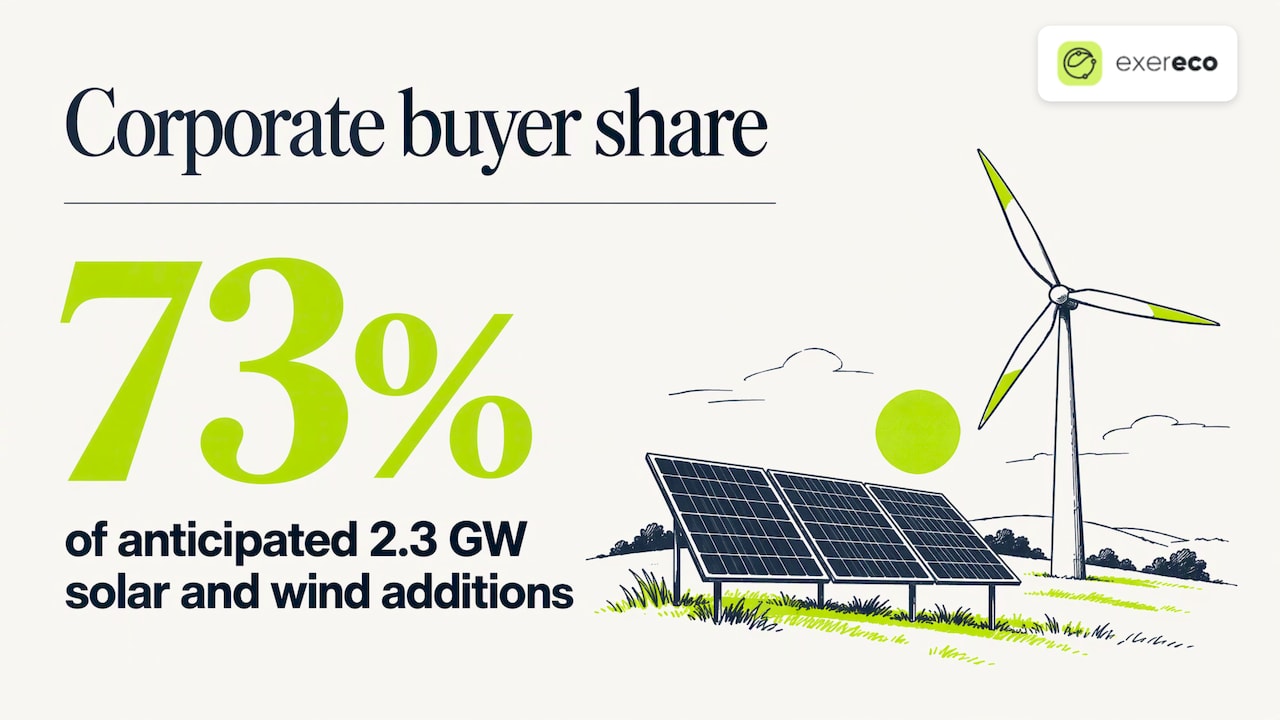
The numbers back it up. BloombergNEF’s September 2026 South Africa Transition Factbook says corporate buyers are expected to support 73% of the country’s anticipated 2.3 GW of solar and wind additions in 2026. Those are forecasts, and they will be revised in later editions, but they show where the private demand is.
For readers following the wider energy picture, our SDG 7 clean energy coverage tracks how these deals sit alongside public programmes.
What to assess before you negotiate
The World Bank and CLDP handbooks, and GreenCape’s South African analysis, point to the same list of questions. Work through them in this order.
1. Can the deal legally happen?
Check whether the generator can legally generate, sell and wheel power, and what registration or licence is needed. The answer is country-specific and sometimes city-specific. In South Africa, for example, municipal wheeling readiness is one of the barriers GreenCape identifies for private projects.
2. Is the grid ready?
Grid access and charges can make or break the economics. GreenCape calls grid access a key screening issue and advises prioritising late-stage projects with approvals, identified customers and credible grid access, because grid capacity is scarce and development pipelines are large. If a developer cannot show a connection route, treat the price on offer as provisional.
3. Do load and generation match?
Solar produces in daylight. If you run three shifts, the PPA covers only part of your consumption and the remainder stays on grid or backup supply. Map your half-hourly load against the plant’s expected output before agreeing a volume.
Offsite supply does not remove grid risk either. The NBI and Bowmans 2025 policy brief notes that offsite supply does not generally exempt a buyer from grid outages or non-discriminatory load shedding.
4. Tariff, indexation and term
The CLDP Climate Finance Handbook (2025) says embedded corporate PPAs are commonly shorter, typically 10 to 20 years, to align the contract with the customer’s site or demand horizon. Ask yourself how long you will occupy the site and how your production plans might change. A 20-year commitment on a 7-year lease is a problem for both sides.
The World Bank handbook explains that a bankable PPA needs a term long enough for debt repayment and predictable tariff terms. Your interest is a fixed or clearly indexed tariff you can model. The generator’s lender will insist on the same clarity, so the two interests usually align.
5. Curtailment and deemed energy
If the grid operator forces the plant to reduce output, who pays? The World Bank handbook notes that emerging-market contracts may compensate qualifying grid curtailment through deemed-generation provisions. As a buyer, read these clauses closely: they determine whether you pay for energy you never received.
6. Payment security, termination and lender rights
Lenders will want rights to step in if things go wrong. You will want clear termination triggers and a fair buy-out formula. Both sides should also agree construction, operating and environmental and social obligations, which feed directly into your ESG disclosures.
Risks and how contracts allocate them
The World Bank handbook summarises the main risks: buyer default, currency mismatch or convertibility, tariff and regulatory change, licensing and wheeling uncertainty, grid connection delays, congestion and curtailment, and construction or operating underperformance. Allocation varies by market and contract, so there is no single continent-wide rule.
Credit risk
Generators and their lenders look hard at the buyer’s ability to pay for 10 to 20 years. The CLDP handbook says offtaker credit risk can be mitigated through parent guarantees, standby letters of credit, shorter terms or business covenants. If your company has a strong parent or banking relationship, that is a negotiating asset. Smaller buyers that need to fund a security deposit or a site upgrade can compare SME business financing options such as working capital and term loans alongside the PPA itself.
Currency risk
A solar plant is often financed in hard currency while your revenues are in local currency. The CLDP handbook says foreign-exchange mismatch may be reduced when corporate revenues and PPA payments share a reserve currency, or through local-currency financing, particularly for smaller projects. Exporters that earn dollars or euros are natural fits for dollar-denominated PPAs. Firms selling only in local currency should push for local-currency pricing or indexation they can model.
Policy and regulatory risk
Rules change, and in some countries they have changed quickly. The two examples below show why you should confirm the current position with the regulator and your legal adviser before signing.
What has changed in South Africa and Kenya
South Africa
The Electricity Regulation Amendment Act was assented to on 16 August 2024. The NBI and Bowmans brief of September 2025 says commencement remained subject to proclamation at that time, so check the current status. Under the Schedule 2 provisions the brief cites, generation that supplies customers without wheeling is exempt from licensing and registration. Wheeled generation is exempt from licensing but must be registered with the regulator, NERSA, and have a connection agreement. The brief also says private procurement has broadened through generator exemptions, wheeling, trader participation and virtual wheeling.
Kenya
Bowmans’ 3 December 2025 update on Kenya says the National Assembly adopted a report lifting the PPA moratorium, subject to conditions including competitive procurement and implementation of the auction policy, with implementation proposed within 12 months. It also says new grid-onboarded PPAs may be denominated in Kenyan shillings, foreign currency or a hybrid. For a buyer, a local-currency option changes the currency question described above.
These are two markets of many. Rules in Nigeria, Egypt, Morocco, Zambia and elsewhere differ, so treat any continent-wide statement with caution.
A lesson from a utility PPA
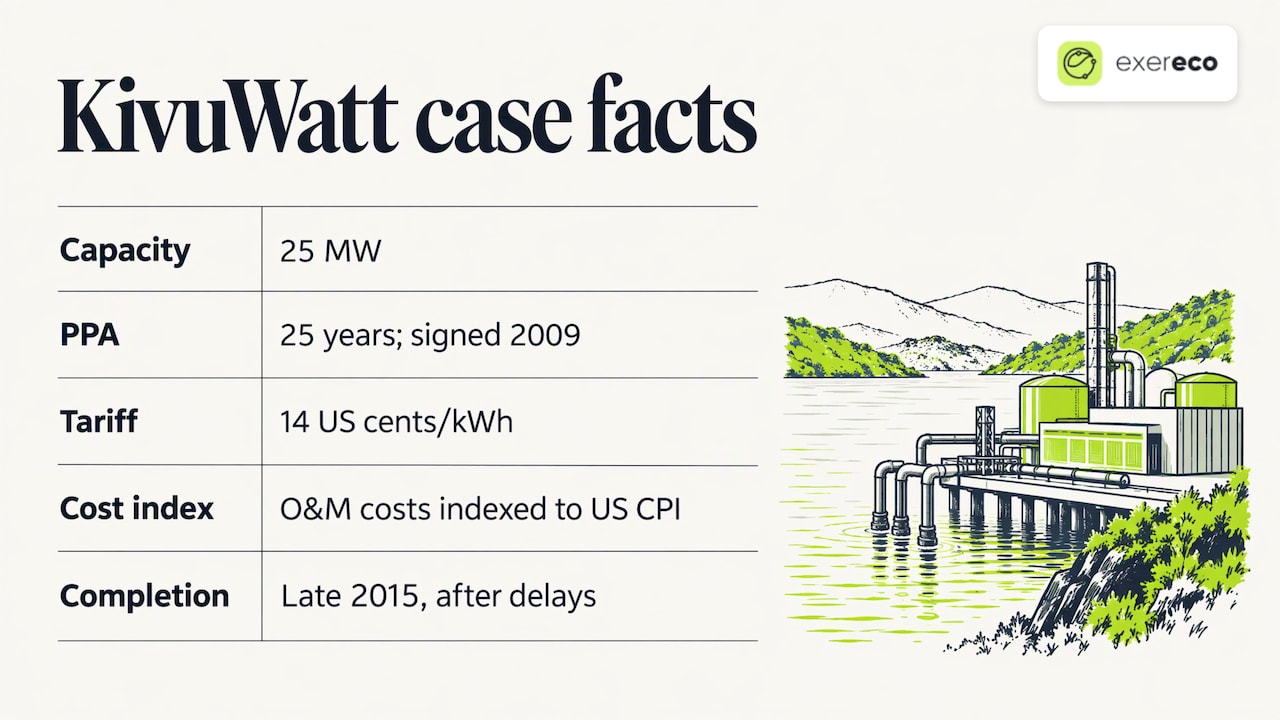
The best-documented African case in the World Bank’s library is a utility deal, not a corporate one, but it shows how the contract elements interact. The KivuWatt methane project in Rwanda is a 25 MW plant that signed a 25-year PPA in 2009 at 14 US cents per kWh, with operating and maintenance costs indexed to US CPI. It was completed in late 2015 after delays. The case illustrates that political support and offtake guarantees can help mobilise finance, while construction and technology-interface risk can still cause delay and cost overruns.
For a corporate buyer the practical lesson is to look at the developer’s delivery record and the contract’s remedies for late completion, not just the headline tariff.
Smaller buyers: aggregating demand
If your load is too small to attract a developer, pooling helps. Baker McKenzie’s report says smaller corporate buyers can aggregate demand to improve pricing and project scale, but must address cross-default exposure, security requirements and competition-law issues. In practice, that means a clear agreement among the participating buyers about what happens if one of them fails to pay.
A checklist before you sign
Confirm the legal route (onsite, private wire, wheeled or virtual) with the regulator and your legal adviser.
Obtain evidence of grid connection and approvals from the developer.
Compare your load profile with expected output, and decide on pay-as-produced or pay-as-nominated.
Test the tariff and indexation against your own cost projections.
Match the term to your site tenure and business plan.
Read the curtailment, deemed-energy, termination and step-in clauses.
Agree the credit support and the currency basis.
Record the data you will need for emissions reporting, such as delivered volumes and certificates.
Making the PPA count in your ESG reporting
A PPA is only as useful to your sustainability disclosures as the data behind it. Keep contract volumes, metered delivery and any certificates in one place, so that your reduction in purchased-electricity emissions can be traced back to the contract. Exereco offers ESG reporting software, advisory and compliance support, and training courses for organisations that need to turn energy contracts into credible disclosures. Our SDG 13 climate action page sets out how we support organisations on climate goals.

For the funding side, our guide to sustainable finance in Africa explains the instruments, rules and routes that sit alongside PPAs.
FAQ
What is the difference between a corporate PPA and a utility PPA?
In a utility PPA the buyer is a state utility, and the deal usually feeds the national grid. In a corporate PPA the buyer is a business that contracts directly or indirectly with a generator for its own consumption. Corporate contracts are commonly shorter, typically 10 to 20 years, to fit the buyer’s site or business horizon.
Do I need a power plant on my own site?
No. Onsite generation is one option, but power can also be wheeled across the grid or settled virtually as a financial price difference. Which routes are open depends on the country’s licensing and wheeling rules, and in South Africa wheeled generation must be registered with NERSA and have a connection agreement.
What are the main risks for a corporate buyer?
The main ones are buyer credit, currency mismatch, grid access and curtailment, and regulatory change. Contracts address them through guarantees or letters of credit, aligned currencies or local-currency finance, deemed-generation provisions and explicit termination terms. How they are allocated varies by market and contract.
Can a small business use a corporate PPA?
Yes, often by aggregating demand with other buyers or through an energy trader that combines generation and customer loads. Baker McKenzie’s report notes this can improve pricing and project scale, provided cross-default exposure, security and competition-law points are dealt with in the agreement.
Is Kenya open to new PPAs?
Bowmans reported in December 2025 that Kenya’s National Assembly adopted a report lifting the moratorium, subject to conditions such as competitive procurement and auction-policy implementation. Check the current position with the regulator, since implementation was proposed over 12 months.
Recommended


Comments